Discover the most important tropical and subtropical crayfish species used in aquaculture, aquarium keeping, and ecological research.
📅 Last reviewed: September 2026
These are the most commercially important tropical crayfish species, each with unique advantages for aquaculture operations.
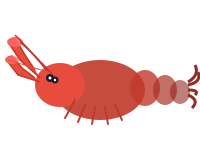
Cherax quadricarinatus
The Red Claw is the most widely farmed tropical crayfish species worldwide. Native to Northern Australia and Papua New Guinea, it's prized for its rapid growth, large size (males up to ~500 g), high meat yield, and docile temperament. It's the species of choice for tropical aquaculture programs across Southeast Asia, Africa, and the Americas.
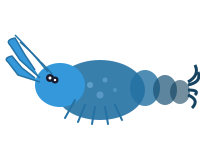
Macrobrachium rosenbergii
While technically a freshwater prawn rather than a true crayfish, Macrobrachium rosenbergii is often grouped with tropical crayfish farming due to similar techniques and market channels. It can reach impressive sizes (up to 300g) and commands premium prices in Asian and international markets.
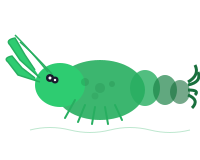
Cherax destructor
The most widespread Australian freshwater crayfish, the yabby is incredibly adaptable and can survive in harsh conditions. While it prefers warmer tropical climates, it has remarkable cold tolerance. Excellent for beginners due to its resilience and relatively simple care requirements.
Cherax cainii (smooth marron; formerly C. tenuimanus)
Marron is Australia's premier aquaculture crayfish, renowned for its sweet, delicate flavor and high market value. It's the third-largest freshwater crayfish in the world. Farming marron requires clean, well-oxygenated water and careful temperature management, making it a premium but profitable enterprise. Note: it is a temperate species (14–24°C) — not a tropical default.
Pacifastacus leniusculus
Native to western North America but now farmed extensively in Europe, the Signal crayfish is one of the most commercially important species in temperate-to-subtropical regions. It's a vigorous grower, a capable burrower, and resistant to many diseases that plague native European species.
Macrobrachium lanchesteri
A smaller but fast-growing freshwater prawn common in Southeast Asian aquaculture. This species is ideal for integrated rice-crayfish systems and backyard farming due to its adaptability to variable water conditions and high stocking densities.
Compare key characteristics to choose the best species for your farming goals.
| Species | Max Weight | Temp Range | Growth Rate | Difficulty | Market Value |
|---|---|---|---|---|---|
| Red Claw | ~500 g | 24–32°C | ⭐⭐⭐⭐⭐ | Easy | Medium |
| Giant Freshwater Prawn | 300 g | 26–30°C | ⭐⭐⭐⭐⭐ | Moderate | High |
| Australian Yabby | ~300 g | 18–30°C | ⭐⭐⭐ | Easy | Medium |
| Black Tiger Marron | 2 kg | 18–28°C | ⭐⭐ | Hard | Very High |
| Signal Crayfish | ~120 g | 15–27°C | ⭐⭐⭐ | Moderate | Medium-High |
| Malaysian Prawn | <5 g | 25–32°C | ⭐⭐⭐⭐ | Easy | Low-Medium |
Beyond commercial farming, these species are important in the aquarium trade, ecological research, or represent unique regional varieties.
Neocaridina davidi
Extremely popular in the aquarium trade for their vibrant red color. Tiny (3–4 cm) and very easy to breed, they're ideal for nano aquariums and beginner aquarists.
Cherax quadricarinatus (Blue morph)
A stunning blue color morph of the Red Claw that's highly prized in the ornamental trade. It maintains all the hardiness and growth traits of the standard Red Claw with spectacular coloration.
Cherax quadricarinatus (Orange morph)
Bright orange color morph developed through selective breeding. These command premium prices in the ornamental trade and can grow to impressive sizes while maintaining their vivid color.
Austropotamobius pallipes
The white-clawed crayfish is Europe's only native crayfish species. Now critically endangered due to introduced American species and disease, conservation farming programs are underway across Europe.
Macrobrachium carcinus
One of the largest freshwater prawns in the Americas, reaching up to 25cm and 300g. Prized in South American cuisine and increasingly farmed in tropical Latin America.
Macrobrachium sp.
Several Macrobrachium species are farmed in Thailand and Vietnam, often in rice paddy systems. They're integral to traditional aquaculture practices across the Mekong Delta region.
Consider these factors when selecting a crayfish species for your farm.
Match species to your local climate. Tropical species like Red Claw thrive above 24°C, while yabbies and signal crayfish tolerate cooler conditions. Your water source temperature will determine which species can be successfully farmed year-round.
Are you farming for food or the ornamental trade? Food production favors fast-growing species with high meat yield (Red Claw, Giant Prawn). Ornamental markets value unique color morphs and small, manageable species.
Beginners should start with hardy, forgiving species like Red Claw or Yabbies. Advanced operations can target premium species like Marron. Factor in broodstock cost, feed requirements, and infrastructure needs.